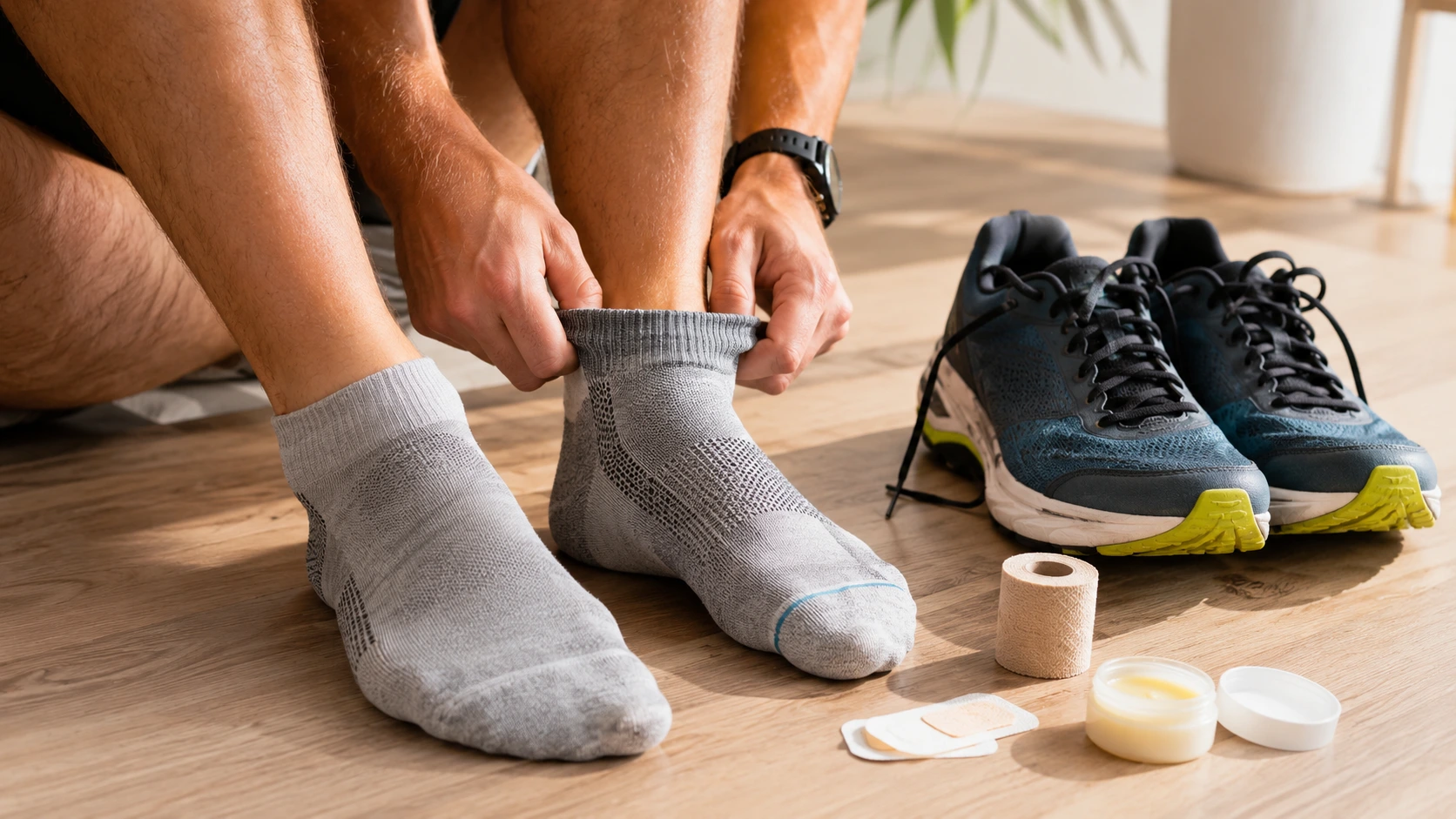
How to Prevent Blisters During Long Runs
Blisters during long runs are usually caused by friction, moisture, and poor shoe or sock fit. Here are practical ways to reduce the risk before race day.
Runners often ask how to avoid foot blisters during long runs or races. Some people use running socks, special lacing methods, Vaseline, anti-chafe balm, tape, or blister plasters. The truth is that blisters usually come from a combination of friction, moisture, and poor shoe or sock fit.
During long-distance running, your foot keeps rubbing against your sock, shoe upper, or insole. If your feet sweat a lot, your socks get wet, or you run in the rain, the risk of blisters becomes even higher.
Normal cotton socks can absorb sweat and stay wet. Once they become wet and heavy, they can increase friction and make blisters more likely. Running socks are usually better because they are designed to wick moisture away, fit more closely around the foot, and reduce bunching inside the shoe.
If you often get blisters between your toes, you could try toe socks. If you often get blisters during long runs, you could try double-layer anti-blister socks. However, sock thickness, material, and shoe fit all need to work together, so it is best to test them during training.
During long runs, your feet can swell because of heat, sweat, and repeated impact. If your shoes are too short or too narrow, your toes may rub against the shoe or hit the front of the shoe. A common guideline is to leave around 0.5-1 cm of space in front of your longest toe.
Bigger is not always better. If the shoe is too large, your foot may slide inside the shoe, which can also increase friction and cause blisters. The ideal fit is enough room in the toe box, but secure around the midfoot and heel.
If you often get rubbing on your little toe, the side of your toes, or the outside of your forefoot, the problem may not just be shoe size. The shoe's toe box may be too narrow. In that case, you may need a wide version or a shoe with a roomier toe box.
If you already know where you usually get blisters, such as your heel, toes, arch area, or forefoot, it can help to protect those areas before the run. You can use blister plasters, sports tape, kinesiology tape, or other anti-friction patches.
Do not wait until it starts hurting. Once you feel a hot spot, it can quickly turn into a blister if you keep running. For long runs and races, it is useful to know your common problem areas in advance.
Anti-chafe balm or Vaseline can reduce friction between your skin and socks. You can apply a thin layer to areas that often rub, such as between the toes, the heel, the side of the arch, or the forefoot. Avoid using too much, because your foot may slide inside the sock.
During long-distance runs, rainy runs, or very sweaty runs, wet socks can increase friction and make blisters more likely. Moisture-wicking running socks can help. For very long races or ultra-distance runs, some runners also carry a spare pair of socks and change them during the run.
Trail shoes are mainly useful for mud, grass, gravel, or technical terrain because they provide better grip. They are not automatically better just because the weather is wet.
Shoe lacing can also affect blisters. If your foot slides forward and backward inside the shoe, it can increase rubbing around the toes, heel, and sole of the foot. One useful method is the runner's knot, also called heel lock lacing. This helps secure the heel and reduce movement inside the shoe.
Do not tie your shoes too tightly. If the top of your foot feels painful, numb, or restricted, the laces are too tight.
There is no single method that can guarantee you will never get blisters. Everyone has different foot shapes, sweat levels, running form, shoes, socks, and race distances. That is why the most important thing is trial and error.
Do not try new socks, new shoes, new tape, or new anti-chafe products for the first time on race day. Test them during normal long runs first, and slowly find the combination that works best for your own feet.
A practical starting point is: good running socks, protecting hot spots early, anti-chafe balm, proper shoe fit, and secure lacing. Preventing blisters is not about one magic solution. It is about finding the right combination that works for your own feet.